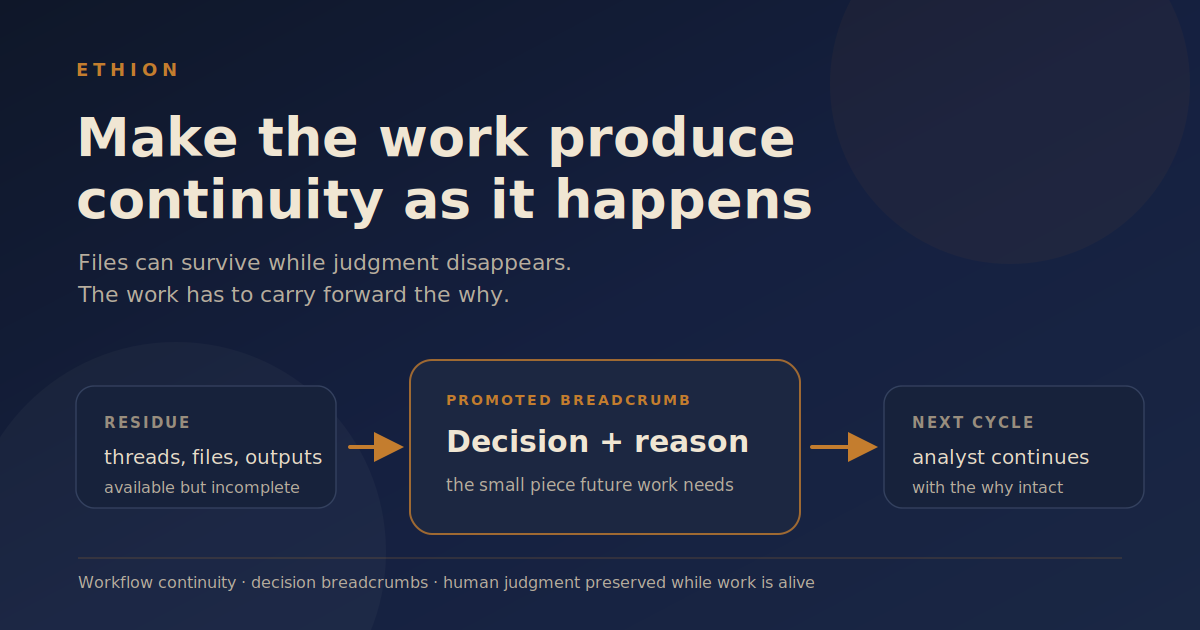
Recurring work has a failure mode that is easy to miss: it can be completed correctly and still become hard for the next person to continue. The report and thread may both survive while the judgment behind one decision stays in someone’s head.
That gap matters more as work moves through shared systems, recurring processes, and AI-assisted tools. Search and summarization can find old artifacts and compress old conversations, but they cannot recover the reason for a decision if the person who made it never turned that reason into part of the work.
Continuity depends on carrying forward the few pieces of judgment that future work will actually need. Ordinary work should leave those breadcrumbs while the context is still alive, before documentation becomes a reconstruction exercise and before the next person has to reopen the past from scratch.
A month after a monthly reporting close, someone opens the workbook again and tries to understand a decision that looked ordinary at the time. The final number, file path, and old thread are all available if anyone wants to dig through them, but the reason the prior analyst treated one variance as recurring instead of escalating it is missing.
The backup analyst searches the thread, compares the old workbook against the current one, and eventually pulls the prior analyst back into the conversation because the next cycle is now blocked by the same missing context.
Continuity is the ability for work to move to whoever inherits it with less loss. A business has continuity when someone can step into meaningful work without rebuilding the past from memory, scattered messages, old attachments, and meeting notes that made sense only to the people who were there.
Most organizations already save plenty of material: reports, message threads, and working files pile up quickly. The useful judgment often disappears anyway because the reason for the decision was never promoted into the place where future work would need it.
After-the-fact documentation loses the part people need
Documentation usually becomes a separate task after the real pressure has moved somewhere else. Once the close is done and the exception is out of the way, someone is expected to write down what happened from memory. By then the tradeoff that felt obvious in the moment has already started to flatten.
That kind of documentation still beats nothing, but it often becomes a low-resolution reconstruction. It tells the next person what was done while leaving them to repeat the analysis, escalate a question that was already answered, or pull the prior analyst back into work that should have been transferable.
The next person usually needs the reason a capable person would otherwise have to reconstruct, not a perfect historical record. A full archive may only add more material to sift through, while a final artifact by itself leaves them with the answer and none of the reasoning.
Capture judgment while the work is alive
The valuable part of a workstream is often created in the middle, when a request shifts, a reporting number lands in the wrong category, or an outdated process step forces someone to make a call. Someone with experience says, “Treat this as recurring,” or “Do not escalate yet; the same pattern showed up two quarters ago, but the threshold is different now.”
That call may feel obvious to the person making it because they carry the surrounding context in their head. To the next person, the missing context can be the difference between continuing the work and reconstructing it.
Continuity capture has to stay close to the work and small enough to survive normal pressure. The analyst should name the goal and constraint early, then preserve the reasoning behind judgment calls as the work changes. The handoff should leave the next person with the decision context they would otherwise have to reconstruct.
If the capture habit becomes heavier than the work, people will stop doing it. The goal is enough useful context that the next capable person does not have to start cold.
Breadcrumbs are different from residue
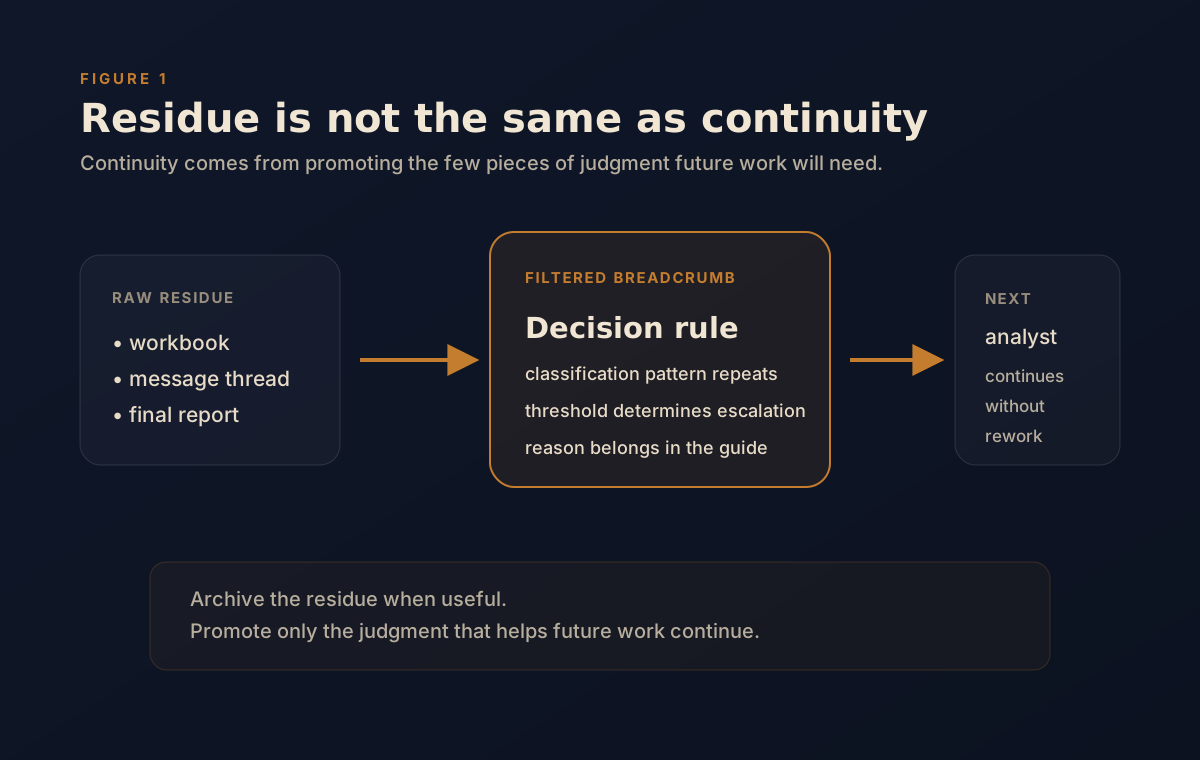
Every workstream produces residue: working files, side conversations, and decisions that made sense under pressure. Some of that material should be archived. Most of it should not be promoted into the living system.
A continuity breadcrumb is the small piece of context that helps future work continue. A raw message thread might contain thirty minutes of back and forth about an exception. The useful breadcrumb may be one sentence: “If this classification appears again during monthly close, treat it as recurring unless the variance crosses the escalation threshold; this was confirmed during the June close after comparing it with the same pattern from two quarters ago.”
That sentence carries the decision forward without forcing the next person to read the whole thread. It promotes the judgment, threshold, and reason into the place where the next analyst is likely to look.
This filtering discipline is easy to miss. Teams often save everything and make the next person search, or they save only the final artifact and lose the reasoning. Continuity needs a middle layer where raw residue can remain available, while the few pieces that help future work are promoted into the close guide or runbook the next analyst actually uses.
What this looks like in ordinary work
Take a monthly management reporting close. The incoming analyst starts the cycle already behind because last month’s handoff was thin. The final report is available and the working files are still there, but one variance was handled in a way that is not obvious from the output.
Before the real work even starts, the analyst has to reopen the workbook, search old messages, and compare the current issue against the prior one. The final number is easy to find. The reason it was treated as a classification issue instead of an escalation only appears after the prior analyst gets pulled back into the thread.
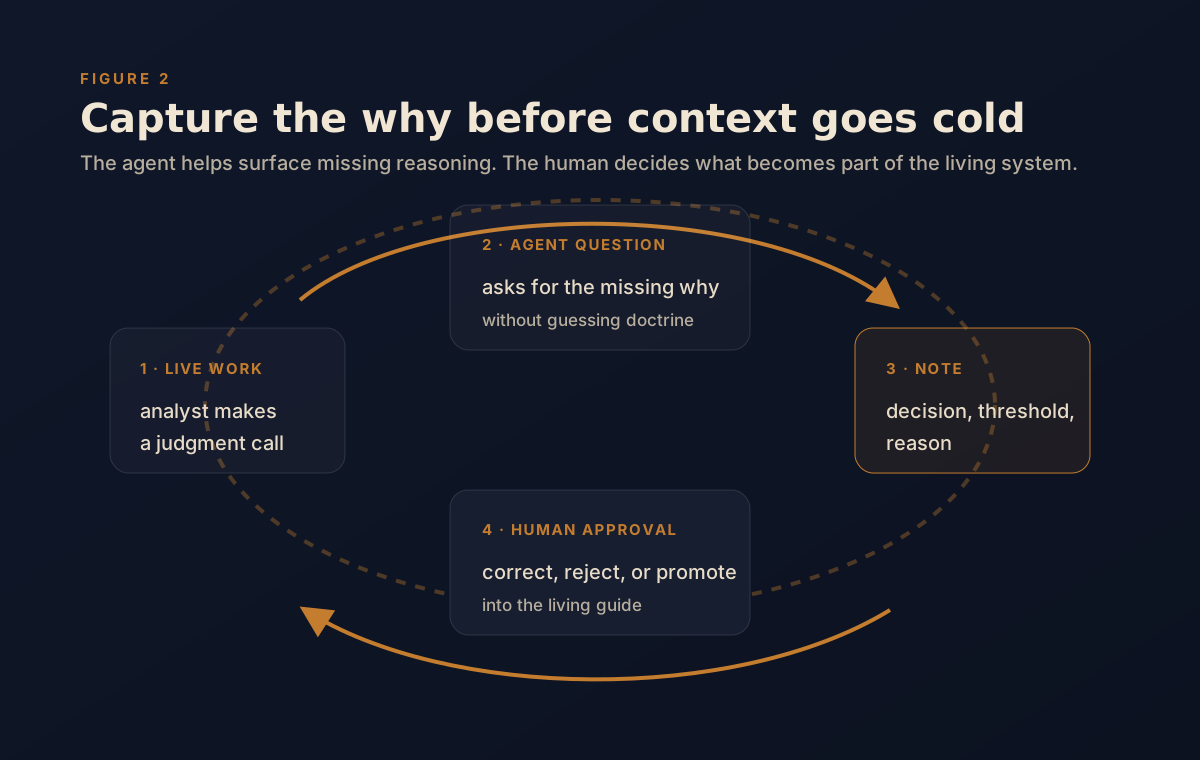
The next cycle can work differently. As the analyst works through the close, the same kind of exception appears again. This time they are working conversationally with an agentic assistant that can compare the current cycle against prior notes and outputs. The assistant sees that the exception resembles an earlier pattern, but it cannot infer the business reason behind the prior call, so it asks whether the next person should treat the issue as recurring or one-off.
The analyst answers while the context is still live: “Recurring. It showed up last quarter too. Escalate only if it crosses the threshold; otherwise classify it this way and note it for the next review.”
That answer becomes a during-work decision note. At closeout, the analyst types handoff, and the agent proposes a short summary of what closed, what changed in the reporting model, and what the next analyst should watch. It also suggests one candidate breadcrumb for the recurring close guide.
The first proposal is too broad. It includes month-specific residue and a generic reminder to “review unusual variances.” The analyst rejects that version because the useful rule is narrower: this classification pattern is recurring, the threshold determines escalation, and the reason belongs in the close guide because the next analyst will see it again.
The raw reconciliation output and working conversation remain archived in case someone needs them later. The guide receives only the useful breadcrumb: the classification rule, the threshold, and the reason. Two cycles later, when the original analyst is out, the backup sees the same pattern and resolves it in minutes without calling the person who handled it last time.
The agent did not magically understand the business. It helped ask for the missing why while the human still had the answer, then proposed a handoff the human could correct before anything was promoted.
AI helps most when it helps capture the why
Retrieval systems help people find what an organization saved, but search cannot recover judgment that was never captured. If the only preserved artifact is the final report, the missing reason stays missing no matter how good the retrieval layer becomes.
This is where AI can help in a more practical way than many knowledge-management conversations suggest. The value is not only later retrieval. It is capture during the work, when the person making the decision still remembers the constraint, the tradeoff, and the reason a particular exception was safe to handle a certain way.
An agent in the workflow can notice that a decision has no explanation attached and ask a small question. Why was this path chosen? Is this exception safe to treat as recurring? The point is to surface the judgment while the person who made it can still answer, then decide what belongs in the living guide.
The human still owns the judgment. The agent does not know the organization’s context by magic, and it should not promote its own guess into doctrine. Its useful role is to make implicit reasoning easier to articulate before it disappears.
That changes the burden on the person doing the work. Instead of asking them to perform a documentation ritual after the close is finished, the system asks for small explanations at the moment their judgment is most available. At closeout, the agent can draft the handoff, but the human approves, corrects, or rejects what becomes part of the living system. Without that approval step, the system risks promoting noise with confidence.
Start with one recurring workstream
The practical place to start is one recurring workstream where context gets lost today. A monthly close or quarterly business review can both work if the same class of question keeps returning and the next person often has to ask why the team handled it a certain way last time.
Do less than feels impressive. The habit usually fails because people try to preserve too much, too late. Start with the decision that would force someone to interrupt the prior analyst next month, and make sure that reason lands in the guide before the cycle is closed.
Then be disciplined about promotion. Archive raw material when it may be useful, but promote only the breadcrumbs that help future work continue. A living guide should not become a junk drawer. If everything is promoted, nothing is findable. If nothing is promoted, the next person gets only residue.
Continuity can become strategic capacity
This can sound like documentation hygiene until a person leaves, a process changes hands, or an AI system tries to help with work that has no preserved reasoning. A company that captures usable judgment inside its work becomes easier to operate across changes in people, roles, and tools.
In the monthly-close example, continuity shows up when the next analyst can see why the prior call was made without pulling someone back into the thread. The backup analyst needs fewer meetings, the process depends less on one person’s memory, and AI has better material to work with because the system preserved the reasoning instead of only preserving the residue.
Continuity becomes strategic when recurring work becomes easier to inherit. The first step is small: choose one workstream where people keep asking why the team handled something a certain way last time, and make the answer part of the work before the context goes cold.
The next time someone opens the workbook, enough judgment has already been carried forward for the work to keep moving.